Court Ordered Alcohol Evaluation
A court ordered alcohol evaluation can feel like one more consequence in an already stressful legal situation. It is also a direct opportunity to address the drinking pattern behind the charge, probation requirement, family concern, or court referral. The court may use the quality of your evaluation to understand risk, determine whether services are appropriate, and monitor your follow-through.

This is not a test you pass by telling someone what you think they want to hear. A credible assessment is built on accurate information, professional judgment, and a clear look at what alcohol has been costing you. When handled seriously, it can become the first practical step toward restoring control.
What Is a Court-Ordered Alcohol Evaluation?
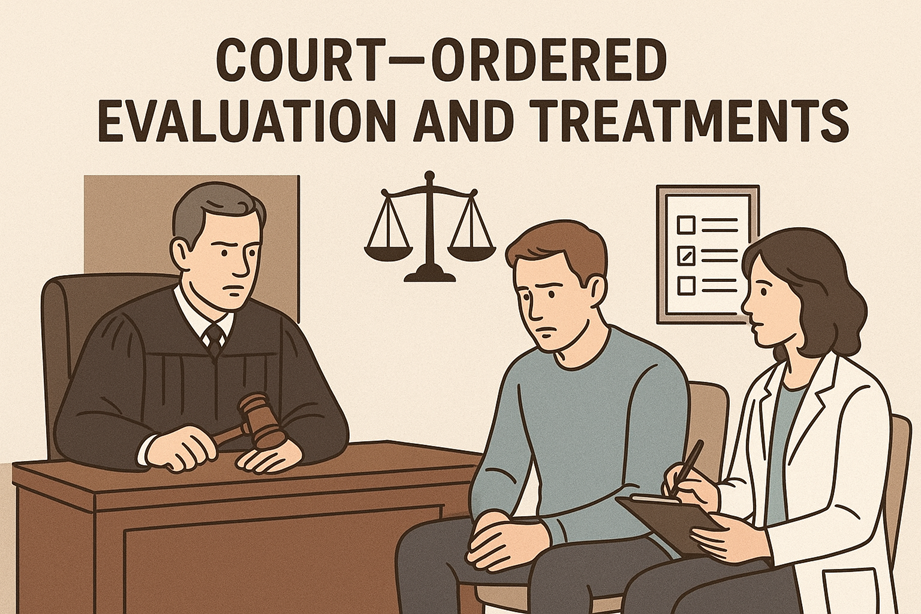
A court-ordered alcohol evaluation is a structured clinical assessment completed at the direction of a judge, probation officer, attorney, employer program, or another legal authority. Its purpose is to assess alcohol use, related consequences, current level of risk, and whether education, counseling, monitoring, or a more focused treatment plan may be recommended.
The evaluator does not decide whether you are guilty of an offense. That question belongs to the legal process. Instead, the evaluator provides a professional opinion about alcohol-related concerns and the level of support that may be appropriate based on the information available.
Requirements are not identical in every Philadelphia-area case. One court may request a completed evaluation and a recommendation, while another may require proof that you have started a recommended program. Read the order carefully. If the wording is unclear, ask your attorney, probation officer, or the referring authority what documentation, deadline, and provider qualifications are expected.
What Happens During the Court Ordered Alcohol Evaluation?
Most evaluations begin with an intake interview. You will be asked about your current alcohol use, when you began drinking, periods when use increased, prior attempts to cut back, and any consequences tied to drinking. The discussion may also cover work, relationships, physical health, emotional stress, prior legal matters, and family history.

A standardized screening questionnaire may be used alongside the interview. These tools help identify patterns that can be missed when someone only looks at the most recent incident. In some cases, the provider may request records, verification of prior services, or other supporting information if that is permitted and relevant to the referral.
Expect direct questions. How often do you drink? What happens when you drink? Have you driven after drinking, missed responsibilities, argued with family, or continued drinking after serious consequences? An experienced evaluator asks these questions to establish a complete picture, not to shame you.
The appointment should also give you room to explain context. A single event and a long-standing cycle are not the same. Neither should be minimized. The evaluator must distinguish between an isolated lapse, risky drinking, and a pattern that is repeatedly disrupting your safety, relationships, health, or legal standing.
Court Ordered Alcohol Evaluation: The Report and Recommendation
After the assessment, the provider prepares the documentation required by the referral. Depending on the court or program, the report may confirm that the evaluation was completed, summarize findings, state recommendations, or outline a treatment or education plan. Some reports are sent directly to the referring authority; others are provided to you for submission.
Do not assume every conversation in an evaluation is private in the same way as routine therapy. Court-related assessments have specific reporting purposes and consent forms. Before you begin, ask who will receive the report, what information it will contain, and whether there are limits on confidentiality. Clear answers protect you from surprises later.
How to Prepare Without Making Things Worse
Bring the court order or referral paperwork, a government-issued ID, and any deadline information. If you have records from prior counseling, education programs, or completed treatment, bring those only if they are relevant to the referral or requested by the provider. Showing up on time and prepared is a simple but meaningful sign that you are taking the process seriously.
The most useful preparation is honesty. Do not inflate a story to seem more troubled, and do not downplay details because you are worried about a recommendation. Inconsistent answers can undermine the assessment. A recommendation based on incomplete information may also fail to address the issue that brought you to court in the first place.
It helps to think through a few facts before your appointment: your typical drinking week, your heaviest recent drinking periods, the events that led to the legal referral, prior efforts to stop, and the people affected by your alcohol use. You do not need a perfect script. You need an accurate account.
If you are currently trying not to drink, say so. If you have relapsed after prior efforts, say that as well. Repeated relapse is not proof that change is impossible. It is evidence that a different level of structure, a more individualized approach, or stronger intervention may be needed.
Why Following Recommendations Matters
For many people, the evaluation is only the first requirement. The court may expect you to complete education, counseling, monitoring, or a treatment plan and provide verification. Missing appointments, delaying enrollment, or submitting paperwork late can create avoidable legal problems even when you have every intention of cooperating.
More importantly, treatment recommendations should not be treated as a box to check. Alcohol misuse often becomes dangerous because it is tied to familiar pressure points: stress after work, isolation, conflict at home, social settings, grief, anxiety, or the belief that one drink will not lead anywhere. A plan that identifies those patterns is more useful than generic advice to simply try harder.
The right recommendation depends on your history, the severity of consequences, the court’s conditions, and what has or has not worked before. Some people benefit from brief alcohol education and accountability. Others need structured alcohol-focused care that addresses cravings, habits, emotional triggers, and the behavior patterns that keep pulling them back.
Philadelphia Addiction Center provides court-related alcohol evaluations alongside individualized, alternative treatment options. For people who do not want a one-size-fits-all approach, services such as hypnotherapy, hypnosis, auricular acupuncture using the NADA protocol, and focused alcohol interventions may be considered as part of a broader plan. The goal is not to make excuses for the legal situation. It is to interrupt the destructive pattern that made the situation possible.
Common Questions About Court-Ordered Evaluations
Can I choose my own provider for a court-ordered alcohol evaluation?
Sometimes, but not always. Your order may name an approved provider, require a licensed professional, or set other conditions. Confirm the requirements before scheduling. Paying for an evaluation that the court will not accept wastes time and can put you closer to a deadline.
Will the evaluator tell the court everything I say?
The answer depends on the purpose of the evaluation, the consent forms you sign, and the reporting requirement. Ask for a plain-language explanation before the assessment starts. You deserve to understand what will be documented and where it will be sent.
Does a court-ordered alcohol evaluation automatically mean I need treatment?
No. An evaluation is an assessment, not an automatic diagnosis or predetermined outcome. Still, if the findings show that alcohol is creating significant risk or repeated consequences, a recommendation for services may be appropriate. Treat that recommendation as a chance to make a real change before the next incident carries a higher cost.
What if I disagree with the recommendation of a court-ordered alcohol evaluation?
Ask the evaluator to explain how the recommendation was reached and make sure you understand the next steps. If you have legal concerns about the order or its impact on your case, speak with your attorney. Do not ignore the recommendation or deadline while you are seeking clarification.
A court requirement may have brought you to the appointment, but your next decision is still yours. Use the evaluation to be candid, meet the conditions placed before you, and choose support that gives you a credible path away from alcohol-driven consequences.
Court Ordered Alcohol Evaluation at the Philadelphia Addiction Center-the #1 outpatient treatment facility for alcohol abuse.
Because Philadelphia Addiction Center primarily provides outpatient medical services, our patients truly feel as though their therapy is progressing. According to Dr. Tsan, the jail-like settings that use “security” for addiction treatment are ineffective. According to Dr. Tsan, “the patient chooses to be sober or on alcohol and drugs.” Rather, he infuses the right suggestions into a person’s subconscious mind, utilizing his immense hypnotic skill. These recommendations compel patients to make the right choice and say “NO” to drugs and alcohol from within their emotional realm. To help their patients deal with the stress and situations they meet in the “real world,” Dr. Tsan and his colleagues provide them with direct assistance and compassionate care during addiction therapy.
While alcoholism treatment centers are in almost every state of the US, not all of them can prove a high success rate in the treatment of alcohol abuse. Philadelphia Addiction Center, the subdivision of the Philadelphia Holistic Clinic, is known as the home for the “Esperal Implant” on the East Coast of the USA. The success rate of the treatment provided at the center is way above average in the industry.
For more information about Esperal treatment for alcohol abuse, contact Philadelphia Addiction Center at (267) 403-3085