Disulfiram
A person who has promised to stop drinking, then found themselves back at the same bar, store, or bottle days later, does not need another lecture about willpower. They need a barrier that makes the next decision different. Disulfiram implant effectiveness centers on that barrier: creating a sustained alcohol-deterrent response while a person builds the support, routines, and coping skills required for real change.
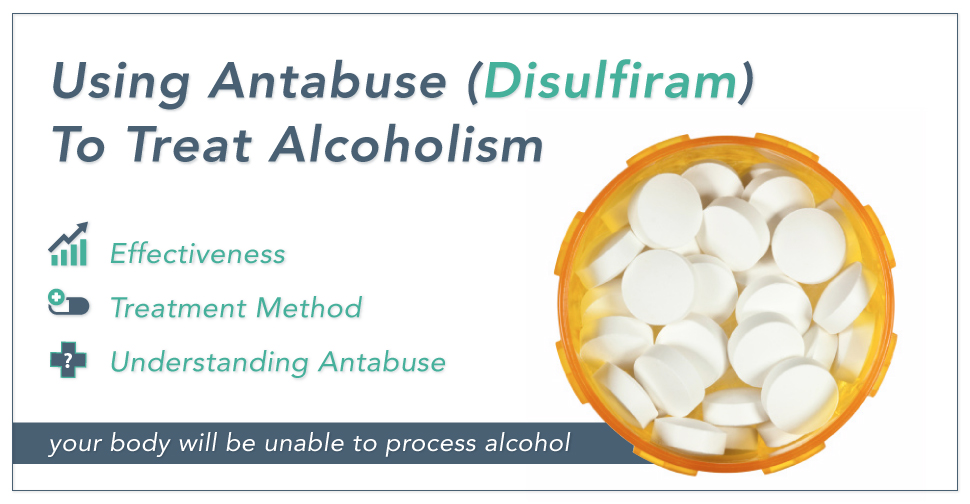
For the right candidate, implant-based disulfiram treatment can be a serious, focused intervention for alcohol dependence. It is neither a cure nor meant to replace counseling, medical oversight, or personal commitment. Its value is that it can make alcohol use an immediate and physically unpleasant prospect, giving recovery work more room to take hold.
How Disulfiram Implant Treatment Works
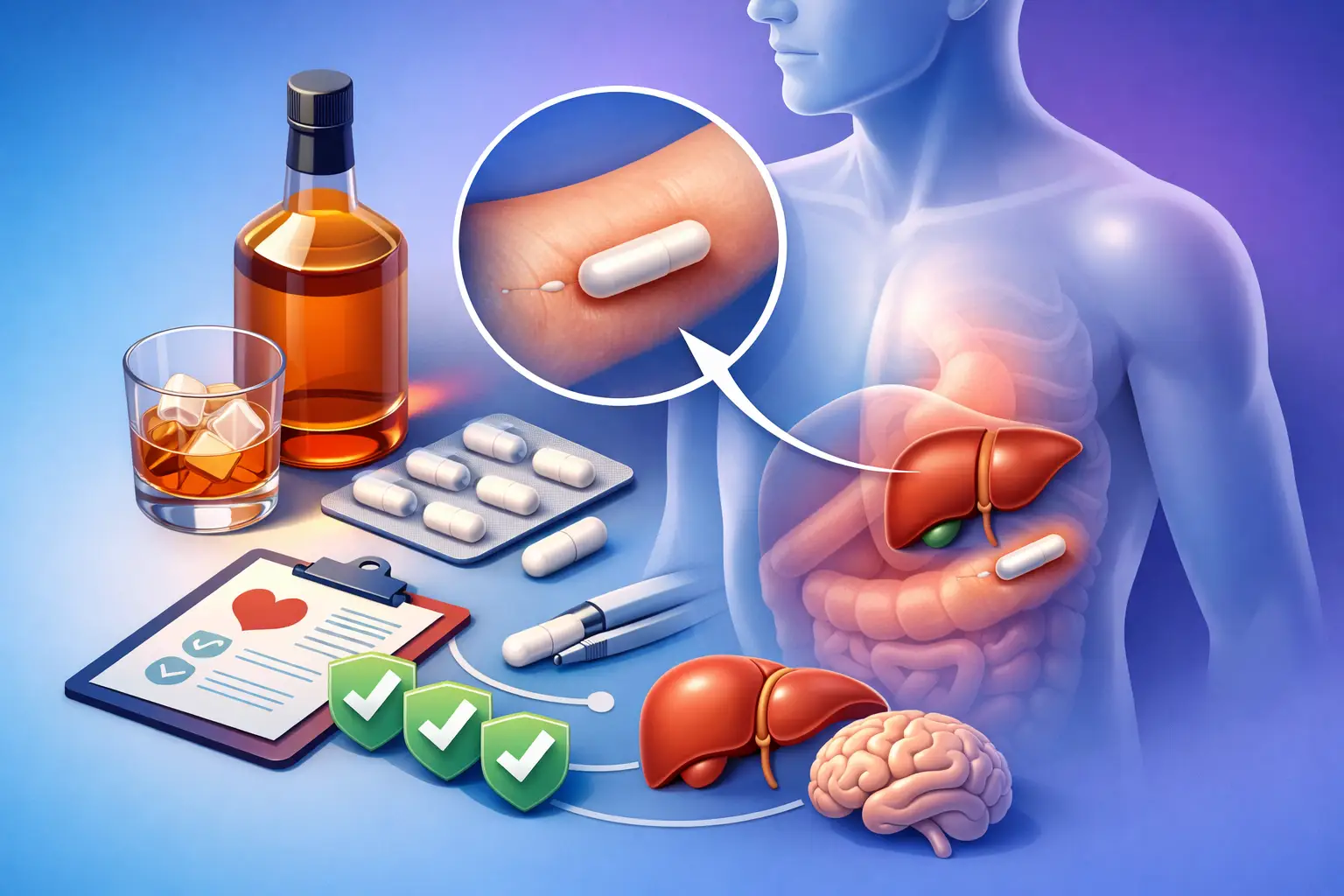
Disulfiram interferes with the body’s normal processing of alcohol. When alcohol is consumed while disulfiram is active, acetaldehyde can build up in the body. This may cause flushing, headache, nausea, vomiting, sweating, chest discomfort, rapid heartbeat, low blood pressure, and significant anxiety. Reactions can be severe, which is precisely why treatment must begin with a careful medical assessment and clear patient education.
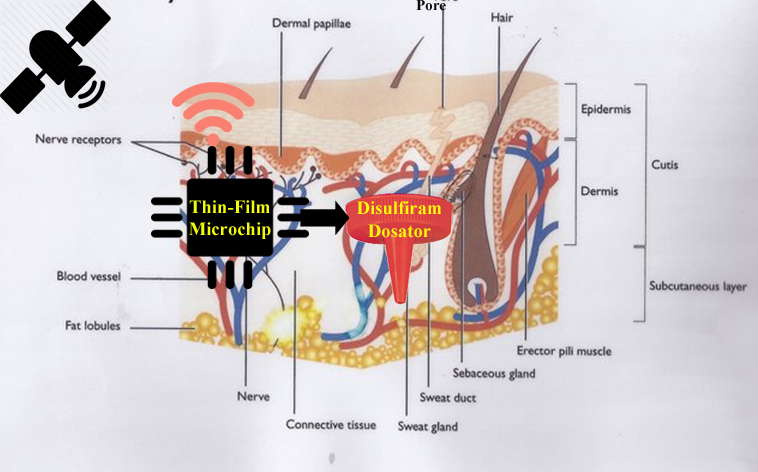
An implant places disulfiram beneath the skin, commonly in an area such as the upper buttock or abdomen, through a minor clinical procedure. The goal is to provide a longer-lasting deterrent than a daily tablet. Instead of relying on someone to take a pill every morning during a period of cravings, stress, or ambivalence, the implant is intended to keep the deterrent in place over time.
That distinction matters. Many people with alcohol dependence do not fail because they do not understand the consequences of drinking. They fail at the moment when consequences feel distant and the urge feels immediate. A treatment plan that changes the immediate equation can be useful, especially after repeated relapse or when family, career, legal, or health consequences have made delay too costly.
What Determines Disulfiram Implant Effectiveness?
The implant itself is only one part of the outcome. Disulfiram implant effectiveness is strongest when the treatment is approached as a structured commitment rather than a stand-alone procedure. A person’s motivation, medical suitability, aftercare, and willingness to avoid alcohol all shape the result.
The person must be ready to avoid alcohol
Disulfiram does not reduce alcohol cravings for everyone, nor does it erase the emotional reasons a person drinks. Its primary purpose is deterrence. It works best for people who genuinely want a firm external boundary between themselves and alcohol, even if they recognize that their motivation can fluctuate.
Such motivation is why an honest pre-treatment conversation matters. Someone who plans to test the implant, drink occasionally, or use it to satisfy another person without engaging in treatment may face unnecessary risk. The right question is not simply, Can this device stop me from drinking? It is. Am I prepared to use this period of protection to change how I live, cope, and respond to triggers?
Proper screening protects safety and disulfiram implant effectiveness.
A qualified provider should review alcohol use, current health conditions, psychiatric history, liver health, allergies, and all medications and supplements. Disulfiram is not appropriate for every person. Certain cardiac conditions, significant liver concerns, pregnancy, serious mental health symptoms, and medication interactions may change whether it is a suitable option.
Patients must also understand that alcohol can appear in more places than drinks. Some mouthwashes, cough products, cooking extracts, sauces, aftershaves, and personal-care products may contain alcohol. A treatment provider should give practical guidance on what to check and what to avoid. This is not a minor detail. Accidental exposure can be distressing, and prevention begins with clear instructions.
Consistent follow-up changes the trajectory
The procedure may be brief, but recovery is not. Follow-up appointments create accountability and give patients a place to address cravings, relationship conflict, anxiety, sleep disruption, social pressure, or the habits that previously led to drinking.
For many patients, a combined plan is more effective than any single approach. Hypnotherapy can help reinforce a decision to abstain and address conditioned responses to alcohol. Auricular acupuncture using the NADA protocol may support relaxation and stress management for some individuals. Behavioral support can help a person identify high-risk situations and make a concrete plan for those situations before they arise.
The point is not to overload someone with services. It is to match treatment to the reasons alcohol became difficult to control in the first place.
What the Evidence Can and Cannot Tell You
People often want a simple answer: Do disulfiram implants work? The honest answer is that results depend on the person and the treatment setting.
Disulfiram has a long history as an alcohol-deterrent medication, particularly when use is supervised or supported by a structured treatment program. Research on implanted forms is more limited and less consistent than research on oral disulfiram. Implant formulations and procedures can vary, and the duration or amount of active medication released may differ between approaches.
In the United States, patients should ask directly about the formulation being used, its regulatory status, expected duration, potential risks, and the provider’s follow-up process. An ethical treatment discussion does not promise that an implant will permanently eliminate alcohol use. It explains the role of the intervention and establishes a plan for what happens next.
That transparency is especially valuable for people who have been disappointed by quick fixes. Implant treatment can provide a meaningful period of protection, but lasting abstinence comes from what a person does during that period: changing routines, building accountability, repairing support systems, and learning to handle discomfort without returning to alcohol.
Who May Benefit From an Implant-Based Deterrent?
This approach may appeal to adults who have tried to stop drinking on their own and repeatedly returned to alcohol, who struggle to remain consistent with daily medication, or who want a private, direct intervention with ongoing support. It can also be considered by people facing serious family, work, or legal pressure who are ready to take decisive action.
It may not be the best choice for someone who is uncertain about abstinence, has medical contraindications, or wants a treatment that works without participation. A thoughtful evaluation is not an obstacle to care. It is how a provider determines whether this intervention fits the person in front of them.
Turning Deterrence Into a Recovery Plan
The most productive time to prepare for treatment is before the procedure. Identify the situations that have led to drinking, including specific people, places, times of day, and emotional states. Decide who will know about the treatment and who can provide support. Remove alcohol from the home, plan alternatives for social events, and schedule follow-up care before cravings become a crisis.
At Philadelphia Addiction Center, implant-based alcohol deterrent treatment can be paired with individualized therapeutic services designed to address the patterns behind alcohol use. The aim is direct: help patients create enough distance from alcohol to regain control, stabilize their lives, and practice a different response when pressure hits.
If alcohol has repeatedly taken more than it has given, a serious intervention may be the line that interrupts the pattern. The next step is not to promise perfection. It is to choose a safe, medically informed plan and begin acting on it.
Philadelphia Addiction Center is the #1 Outpatient Treatment Facility for alcohol abuse.
While alcoholism treatment centers are in almost every state of the US, not all of them can prove a high success rate in the treatment of alcohol abuse. Philadelphia Addiction Center, the subdivision of the Philadelphia Holistic Clinic, is known as the home for the disulfiram implant (brand name “Esperal Implant“) on the East coast of the USA. The disulfiram implant effectiveness treatment provided at the center is way above average in the industry.
For more information about Esperal treatment for alcohol abuse, contact Philadelphia Addiction Center at (267) 403-3085