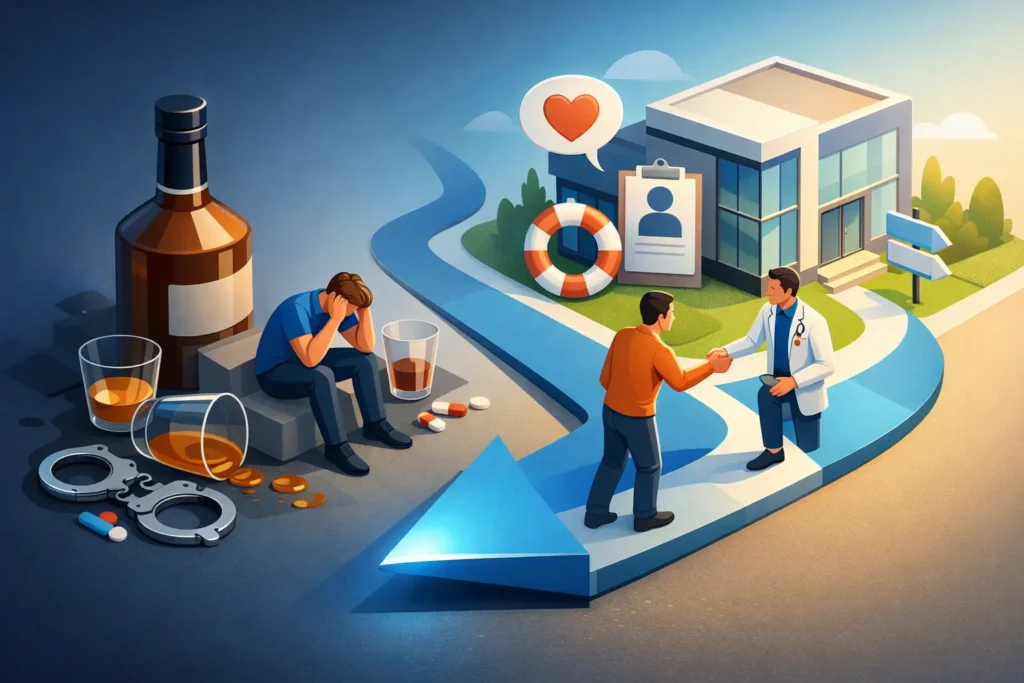
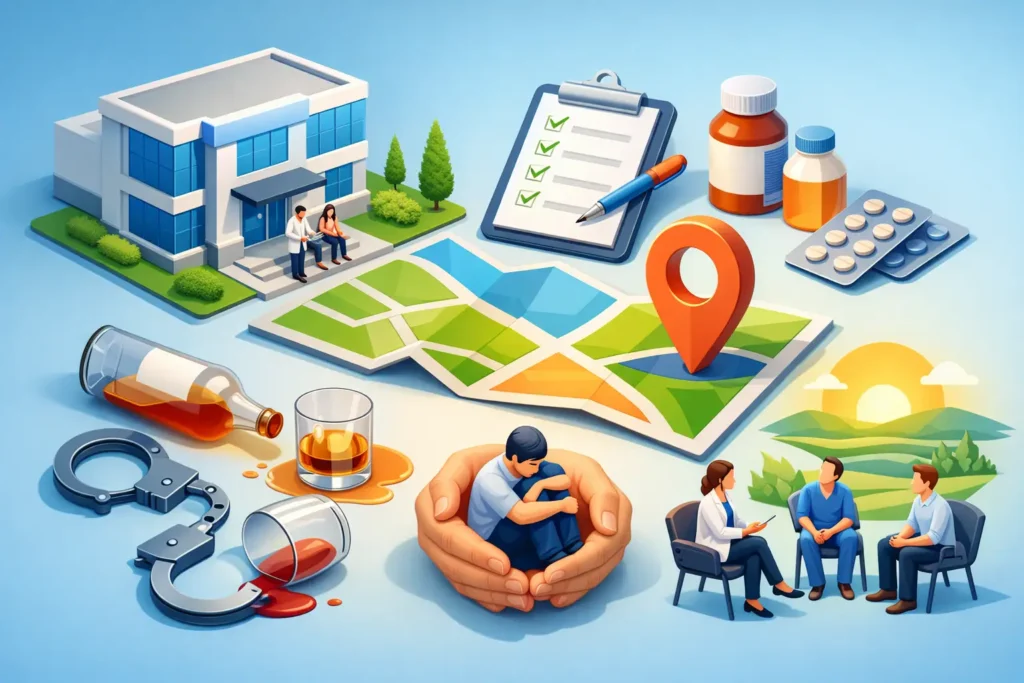
Some people look for help at 2 a.m. after a blackout, an argument, or another promise they did not keep. Others start searching after a DUI, pressure from family, or fear that drinking is becoming impossible to control. In many of those moments, alcohol addiction treatment online feels like the fastest and most private way to take the first step.
That interest makes sense. Online care removes travel, shortens the delay between decision and action, and gives people a way to speak with a professional before the situation gets worse. But online treatment is not one single service. It can mean assessment, counseling, relapse prevention, accountability support, family guidance, or a structured treatment plan delivered partly through virtual sessions and partly through in-person care when needed.
For adults in the Philadelphia area who want direct action, the key question is not whether online treatment exists. The real question is whether it is strong enough for your situation and whether it connects you to a plan that actually changes behavior.
When alcohol addiction treatment online makes sense
Online treatment can be a strong starting point when someone is still functioning outwardly but knows drinking is causing damage. Maybe work has not fallen apart, but concentration is slipping. Maybe there is no daily crisis, yet every week includes binge drinking, hiding alcohol, or failed attempts to stop. In these cases, virtual treatment can create immediate structure before the pattern deepens.
It also fits people who need privacy. Many adults avoid care because they do not want to sit in a waiting room, explain repeated absences, or announce to others that they are getting help. A secure online appointment lowers that resistance. It gives you direct access to a professional conversation without the friction that often keeps people stuck.
Online care can also be useful when the person is motivated but overwhelmed. If drinking has already led to legal stress, relationship conflict, or work pressure, the easiest appointment to attend is usually the one that happens quickly and from home. That speed matters. Motivation after a painful incident is often short-lived, and delaying treatment can mean losing the window where a person is ready to act.
What online alcohol treatment can actually include
Good online care should be more than a video chat and vague encouragement. It should begin with a focused assessment of drinking patterns, triggers, consequences, prior quit attempts, family dynamics, and any barriers to treatment. Without that clinical picture, the advice tends to stay generic.
From there, treatment may include individual counseling, behavior-change planning, accountability sessions, coping strategies for cravings, and support around relapse patterns. Some people also need practical guidance for situations that repeatedly trigger drinking, such as isolation at night, social pressure, or stress after work. The goal is not only to talk about alcohol. The goal is to interrupt the cycle that keeps alcohol in control.
For some patients, online services also work as the front door to a more specialized plan. That may include a recommendation for in-person treatment, a formal alcohol evaluation, or a broader intervention strategy tailored to the person’s level of dependence. This is especially important when someone has already tried standard methods and keeps returning to the same behavior.
A clinic like Philadelphia Addiction Center stands apart when it treats online care as part of a targeted intervention rather than a passive check-in. People who are serious about stopping need more than reassurance. They need a clinician who can identify what has failed, what has been avoided, and what kind of treatment match has the best chance of producing real change.
The limits of alcohol addiction treatment online
Online treatment is convenient, but convenience is not the same as full clinical coverage. There are situations where virtual care alone is not enough.
If someone is drinking heavily every day, has severe withdrawal risk, or cannot safely reduce alcohol use without medical monitoring, online-only care is the wrong fit. The same is true when the person is in repeated crisis, unable to follow through, or actively minimizing the seriousness of the problem while family members are seeing clear danger. In those cases, in-person treatment becomes more than helpful. It becomes necessary.
There is also a difference between access and engagement. Some people like the idea of online treatment because it feels less intimidating, but they also use distance to stay partially detached. They attend the session, say the right things, then keep drinking in the same pattern. That does not mean online care fails. It means treatment has to be direct, structured, and honest about accountability.
The strongest providers will say this clearly: it depends on severity, stability, and willingness. Virtual treatment can be highly effective for the right person at the right point in the problem. It is less effective when the drinking pattern has escalated beyond what remote support can safely contain.
How to tell whether an online program is credible
Not all online alcohol services are treatment. Some are content platforms, coaching programs, or loosely managed support calls. If you are looking for actual help, you should expect a provider to define what they do, who they treat, and when they refer patients to a higher level of care.
A credible program starts with assessment instead of assumptions. It should ask direct questions about quantity, frequency, consequences, prior treatment history, and relapse triggers. It should also explain the treatment model in plain language. If a provider cannot tell you how they work, what progress should look like, or how they adjust care when someone is not improving, that is a warning sign.
You also want a treatment plan that is individualized. People drink for different reasons and keep drinking for different reasons. One person drinks to shut off anxiety at night. Another drinks in social settings and then loses control. Another stops for a few weeks, then relapses after conflict or shame. These are not the same treatment problem, and they should not receive the same generic script.
Why many people still need a hybrid approach
For many adults, the best answer is not online versus in person. It is a combination of both. Online care can create immediate traction – fast scheduling, privacy, and regular support – while in-person services can provide deeper intervention, specialized therapies, and stronger behavioral interruption.
This matters for people who want alternatives to conventional rehab-only models. Some respond better to treatment that includes holistic methods and focused behavioral work rather than a one-size-fits-all program. When a provider offers specialized interventions alongside counseling, treatment becomes more flexible without becoming vague.
A hybrid plan also helps when life logistics are getting in the way. Someone may be able to attend online sessions consistently but come in for selected services that require direct clinical contact. That balance can keep treatment realistic while still making it more intensive where needed.
What to expect in the first step
The first step should feel clear, not confusing. You should expect direct questions, a serious review of your alcohol use, and a recommendation based on your actual situation rather than a canned sales pitch. If your case can be handled online safely, that should be explained. If it cannot, you should be told that too.
This first conversation is often where people realize they have been underestimating the problem. Drinking does not have to look extreme to be destructive. If alcohol is affecting your judgment, relationships, work, legal standing, or ability to stop once you start, that is enough reason to seek treatment now.
The best time to act is usually before the next crisis forces the issue. Alcohol problems tend to narrow your options over time. Treatment should do the opposite. It should widen them, restore control, and give you a practical way forward that fits your level of need.
If you are searching for alcohol addiction treatment online, do not settle for something soft, vague, or purely motivational. Look for a provider that treats this as a real clinical problem, responds quickly, and knows when online support is enough and when stronger intervention is the smarter move. The right first step is the one that gets you into treatment before alcohol makes the next decision for you.