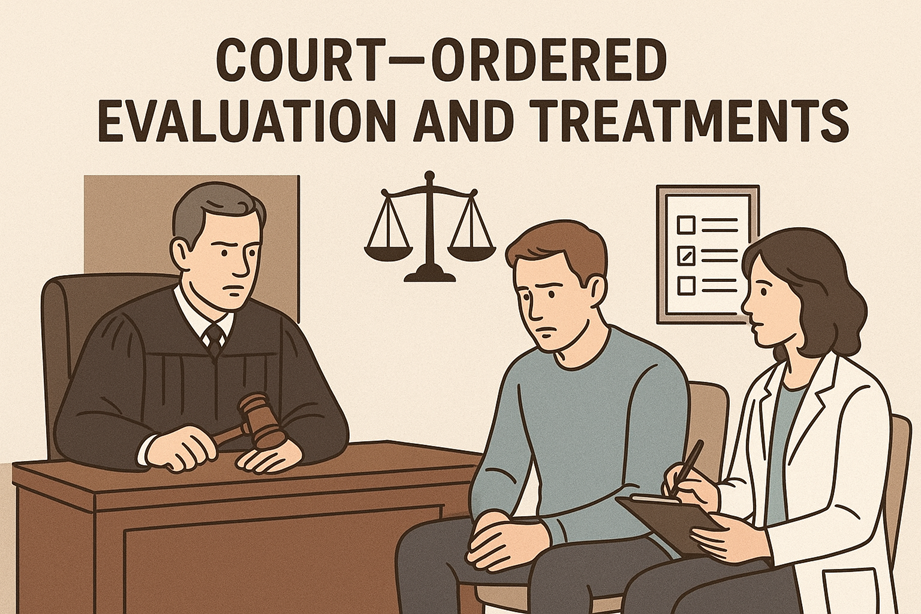
 Court-Ordered Evaluation
Evaluation determines whether you qualify for court-ordered alcohol treatment and shapes a tailored plan that may include detox, inpatient or outpatient care, therapy, and regular court monitoring; you will be supervised by a multidisciplinary team, required to submit to testing and court check-ins, and expected to complete milestones that reduce incarceration risk while providing the skills and supports to rebuild relationships, reduce relapse, and reintegrate into your community.

Key Takeaways:
- Court-ordered alcohol evaluations assess substance use severity and guide a multidisciplinary team in creating a long-term treatment plan.
- Drug courts and treatment courts offer alternative sentencing for many non-violent, substance-related offenses, often deferring traditional sentences when participants qualify.
- Eligibility depends on factors such as type of offense, criminal history, proof the crime was substance-related, mental-health risk, plea, judge, and jurisdiction.
- Treatment options include detox, inpatient and outpatient programs, group therapy, substance education, accelerated diversion programs, and residential programs like RDAP.
- Programs require close monitoring (random drug tests, court check-ins), use incentives and sanctions, and typically include therapy and relapse-prevention training.
- Court-ordered treatment can lower incarceration rates and taxpayer costs, improve relapse prevention, and support reintegration and healthier relationships.
- Participants often bear at least part of the cost; some coverage may be available through private insurance, Medicaid/Medicare, or ACA-compliant plans depending on the plan and state.
Overview of Court-Ordered Alcohol Evaluations
Purpose and Importance
Evaluations determine whether your alcohol use contributed to the offense and what level of care you need; clinicians use standardized tools like the AUDIT, CAGE, or ASI plus collateral records to assess dependence severity and co-occurring mental health issues. Courts rely on those findings to recommend outpatient, inpatient, or supervised options that can reduce incarceration risk. Given that 46% of federal and 42% of state inmates were using drugs at arrest and an estimated 80% of inmates have SUD, accurate evaluation guides sentencing toward effective treatment and lower recidivism.
Process of Evaluation
During the evaluation you’ll complete structured screening and a clinical interview covering substance history, legal  involvement, and medical and psychiatric status, alongside a physical exam and urine or blood toxicology (including EtG for alcohol). Assessors gather collateral information from probation, medical records, or family. Evaluations are often finished in 1–3 sessions and produce a written report with the recommended level of care, anticipated duration, and monitoring requirements for the judge.
Assessors typically apply ASAM criteria (levels 0.5–4) to match your needs: mild dependence often maps to level 1 outpatient, while severe withdrawal risk or polysubstance use may require level 3–4 residential care and medically supervised detox. Toxicology panels screen for opioids, benzodiazepines, stimulants, and alcohol biomarkers. Your evaluator will also outline monitoring—random testing and periodic progress reports to the court—so the treatment plan can be adjusted based on your clinical response.
Types of Court-Ordered Treatments for Alcohol Addiction
You’ll encounter several distinct treatment tracks in drug court because drug-related cases make up 46% of the federal and 42% of the state incarcerated populations, and roughly 80% of inmates show signs of SUD. Programs range from pre-plea diversion and medical detox to 30–90 day residential stays, intensive outpatient (IOP) schedules, and specialized courts (opioid, DWI, veterans) that combine counseling with medication-assisted treatment (MAT).
- First-time, low-level offenders often participate in accelerated or diversion programs, which typically last between 3 and 12 months.
- Detox under medical supervision—usually 5–30+ days depending on substance and severity.
- Inpatient/residential treatment: 24/7 care, common lengths 30–90 days.
- Outpatient/Intensive Outpatient Programs (IOP) require 9–20 hours of participation per week, allowing you to live at home and maintain employment.
- Assume that specialized courts will pair MAT (methadone, buprenorphine, naltrexone), targeted counseling, and frequent drug testing to lower relapse and recidivism.
- The newest and the most effective treatment for alcohol addiction is the Esperal Implant. It is recommended by the majority of courts.
| Accelerated/Diversion | Eligibility-based, typically 3–12 months, focuses on supervision, education, and community service. |
| Detox | Medical detox: 5–30+ days; withdrawal management, meds as needed, and vitals monitoring. |
| Inpatient Residential | Inpatient residential detoxification typically lasts 30–90 days and includes 24/7 clinical staff, group and individual therapy, and vocational skills training. |
| Outpatient / IOP | The Intensive Outpatient Program (IOP) requires 9 to 20 hours of attendance per week, allowing flexibility for work or school commitments, and it often includes random drug testing. |
| Specialized (MAT / Courts) | Opioid courts integrate MAT (methadone, buprenorphine, and naltrexone); RDAP participants may get up to 12 months reduced federal time. |
Inpatient vs. Outpatient Programs
If your use is severe or you’ve failed outpatient attempts, you’ll likely be steered to inpatient care, where 30–90 day residential stays give you 24/7 supervision and daily therapy; conversely, outpatient programs (including IOP) deliver 9–20 hours weekly of groups and counseling so you can maintain work or family obligations while submitting to court monitoring and random tests.
Specialized Court-Ordered Treatment Options
You should expect specialized tracks for opioid dependence, DWI/DUI, veterans, juveniles, and pregnant women; opioid courts commonly mandate MAT plus counseling, while veterans’ tribunals add VA services and trauma-focused therapy to address co-occurring PTSD or mental health issues.
In practice, MAT medications—methadone, buprenorphine, and naltrexone—are integrated with cognitive behavioral therapy and regular court check-ins to improve retention and reduce overdose risk; programs vary by state, so you may see requirements like weekly counseling, biweekly drug screens, and phased incentives tied to milestones such as housing placement or employment.
Legal Framework Surrounding Court-Ordered Programs
Statutes and Regulations
Federal and state statutes define who qualifies for diversion, set funding streams, and govern confidentiality and reporting. The ACA requires Marketplace plans to cover substance use treatment and federal programs like RDAP offer in‑prison residential treatment, though eligibility, duration, and payment rules differ by state. Given that drug-related offenses account for 46% of federal and 42% of state incarcerations, statutory choices directly shape whether you face prison or a court-ordered program.
The Role of Treatment Courts
Treatment courts coordinate a multidisciplinary team—judge, defense and prosecution, probation, and clinicians—to supervise your treatment instead of traditional sentencing. They include specialized dockets (DWI/DUI, opioid, juvenile, and veterans) and emphasize evidence-based care developed over 30+ years. You’ll submit to regular drug testing, structured phases with incentives and sanctions, and frequent court reviews that balance accountability with access to medication-assisted treatment, therapy, and vocational services.
In practice, you move through phased programs where early stages often require weekly court check-ins and intensive counseling; later phases shift to monthly reviews and community reintegration tasks. Teams use validated assessments to track progress and may mandate MAT, cognitive-behavioral therapy, or residential care based on your needs. Successful completion usually leads to reduced or dismissed charges, while noncompliance can return you to criminal proceedings.
Eligibility Criteria for Court-Ordered Treatment
Your eligibility hinges on concrete case and clinical details: non-violent, drug-related offenses and first-time offenders are more likely to qualify, while violent felonies are typically excluded. The court weighs criminal history, evidence that treatment will reduce reoffending, mental-health risks, the plea entered, and state statutes; outcomes also depend on the presiding judge and available local programs.
Factors Influencing Eligibility for Court-Ordered Treatments
You’ll be evaluated on several clear factors before diversion is offered:
- Type of offense (non-violent, drug-related favored)
- Criminal history and prior treatment attempts
- Mental-health risks, including suicidal/homicidal ideation
- Plea status, jurisdiction rules, and judge discretion
Assume that demonstrating stable housing, employment, or insurance improves your chances.
Court-Ordered Alcohol Evaluation: Assessment Procedures
Assessment starts with an intake interview (usually 60–90 minutes), standardized screens such as AUDIT, DAST, or ASAM criteria, urine drug testing, and a suicide-risk checklist; your clinical team then reviews criminal records and prior treatment to recommend level of care.
Clinicians prepare a written assessment for the court within about 7–14 days that lists DSM-5 diagnoses, measured risk scores, and a recommended placement (outpatient, intensive outpatient, or residential). For example, a high ASAM withdrawal score often leads to a 30–90 day inpatient stay, while moderate risk may result in a 12–24 week outpatient track with twice-weekly therapy and regular drug testing.
Common Components of Treatment Programs
You’ll encounter a mix of medical care, behavioral therapy, education, supervision, and case management designed to treat the underlying substance use disorder rather than just punish behavior. Programs often combine detox, inpatient or outpatient rehab, group and family therapy, and vocational training; this integrated approach responds to statistics showing about 80% of the incarcerated population has some form of SUD and that drug-related crimes make up roughly 46% of federal and 42% of state prisoners.
Detoxification and Rehabilitation
If you’ve been using heavily, detox is the first step and can take several days to several weeks with medical monitoring for vitals and withdrawal symptoms. Inpatient rehab then provides 24/7 supervision, medication support when indicated (e.g., methadone, buprenorphine, or naltrexone), and daily therapy, while outpatient tracks let you live at home and attend scheduled sessions—your court team will match the level of care to your risk and needs.
Therapeutic Interventions
You’ll receive evidence-based therapies such as cognitive behavioral therapy (CBT), motivational interviewing (MI), and contingency management, plus group counseling and family therapy to rebuild relationships. Programs frequently pair behavioral work with medication-assisted treatment for opioid or alcohol use disorders, and therapy intensity is adjusted over phases—early stabilization, skill-building, and relapse prevention—so you progress through measurable treatment goals monitored by the court.
For more detail, you might attend CBT two to three times weekly to target triggers and coping skills, join group sessions for peer support several times per week, and have monthly family or couples therapy to repair social networks. Contingency management can provide tangible incentives—vouchers or privileges—for clean drug tests, while MAT reduces cravings and overdose risk; combined, these interventions lower relapse and improve engagement in drug-court populations.
Benefits of Court-Ordered Alcohol Treatments
Impact on Individuals
For you, court-ordered alcohol treatment often replaces or shortens incarceration while providing structured detox, individual and group therapy, and relapse-prevention tools. Studies indicate involuntary programs perform similarly to voluntary ones, and participants typically gain coping skills, improved family relationships, and vocational support that help rebuild employment prospects and daily stability.
Societal Advantages
Communities benefit because treatment diverts non-violent offenders from prison: drug-related offenses account for 46% of federal and 42% of state prisoners, and about 80% of inmates have some form of substance use disorder. Shifting eligible people into treatment reduces prison populations, lowers taxpayer costs, and increases the number of productive, law-abiding citizens.
When your case goes through drug court, the coordinated model—judicial oversight, regular testing, and a multidisciplinary treatment team—creates system-level savings and better outcomes. Programs such as RDAP concentrate on rehab and skill-building for participants, making it more likely they re-enter society employed and stable rather than cycling back into custody.
To wrap up
As a reminder, court-ordered alcohol evaluations and treatments are designed to address the underlying causes of alcohol-related offenses and offer you a structured path away from incarceration. You will undergo assessment, possible detox, individualized therapy, and court monitoring, with clear milestones and consequences. Completing treatment can reduce your legal penalties, lower recidivism risk, and equip you with relapse-prevention skills to reintegrate into the community and rebuild relationships.
FAQ

Q: What is court-ordered alcohol evaluation and treatment?
A: A court-ordered alcohol evaluation is a clinical assessment ordered by a judge to determine the severity of an alcohol use disorder and the appropriate level of care. The evaluator uses interviews, screening tools, medical histories, and often collateral information to recommend detox, inpatient or outpatient treatment, medication-assisted options, counseling, and monitoring plans. The written report guides sentencing or diversion decisions and becomes part of court proceedings.
Q: Who is eligible for court-ordered alcohol evaluation and treatment instead of traditional sentencing?
A: Eligibility varies by jurisdiction but commonly favors non-violent offenders, first-time or low-level offenders, and cases where the offense is connected to alcohol use. Judges consider the type of offense, criminal history, mental health or suicide risk, evidence that treatment would benefit public safety, the plea entered, and applicable state or local drug/diversion court rules. Final eligibility is decided by the court and program staff.
Q: How does the evaluation process work and what information does it produce?
A: The process starts with screening instruments and a diagnostic interview to assess alcohol use, medical and psychiatric conditions, social supports, and legal history. It may include toxicology, a physical exam, or a brief cognitive test. The evaluator assigns a recommended level of care (e.g., outpatient, intensive outpatient, or residential) and outlines treatment goals, expected duration, and monitoring needs. The treatment team and the court get a formal report.
Q: What kinds of treatments can be ordered, and how are they chosen?
A: Courts may order detoxification, inpatient/residential treatment, intensive outpatient programs (IOP), standard outpatient counseling, group therapy, substance abuse education, and medication-assisted treatment (MAT) for alcohol, such as naltrexone, acamprosate or disulfiram, when clinically indicated. The recommended option is based on the evaluation, clinical guidelines (e.g., ASAM criteria), the individual’s medical needs, available local services and the court’s program structure.
Q: How long do court-ordered programs last and what participation requirements can I expect?
A: Length varies by level of care and court program: medical detox can take days to weeks, residential treatment often runs 30–90+ days, IOP commonly spans 8–24 weeks, and many drug courts require 12–24 months of supervised participation. Requirements typically include regular treatment sessions, group meetings, random alcohol or drug testing, scheduled court appearances, case management, employment or education activities, and compliance with probation conditions. Programs use incentives for progress and sanctions for missed requirements.
Q: Who pays for court-ordered evaluations and treatment, and will insurance cover it?
A: Financial responsibility often falls to the person ordered to attend, but coverage depends on insurance and program type. Marketplace plans, such as Medicaid and Medicare, that meet ACA standards generally cover mental health and substance use treatment, though coverage levels and authorized services vary. Many providers accept insurance, offer sliding-scale fees, or have grant-funded slots; courts may also connect participants with financial assistance. Confirm benefits with your insurer and the treatment provider before enrollment.
Q: What are the consequences of non-compliance or relapse during court-ordered treatment?
A: Non-compliance can lead to graduated sanctions such as warnings, increased supervision, more frequent testing, additional treatment requirements, fines, extension of program participation, or incarceration and reinstatement of original charges. Relapse is often addressed clinically by reassessing treatment level, adding medical or behavioral interventions, and adjusting the care plan, but the court will be informed and may impose legal consequences if program conditions are violated. Drug diversion courts typically balance treatment responses with considerations for public safety.
Constant results in court-ordered alcoholism treatment
Since Philadelphia Addiction Center offers only outpatient medical services, our patients have a genuine sense of treatment progress. Doctor Tsan does not believe that the jail-like addiction treatment environments locked down by so-called security are effective. “The patient decides to be on alcohol and drugs or sober,” Doctor Tsan says. Instead, using his enormous power of hypnosis, he infuses the appropriate suggestions into an individual’s subconscious mind. These suggestions force patients, from inside their emotional sphere, to make the right decision and to say “NO” to drugs and alcohol. During addiction treatment, Dr. Tsan and his associates deliver their patients empathetic care and direct assistance to help them cope with the tensions and encounters they face in the “real world.”
Philadelphia Addiction Center offers:
- Hypnotherapy for addictions
- Acupuncture for Alcoholism
- Hypnosis for alcohol abuse
- Antabuse and Naltrexone Implants
- Esperal Implant for Alcoholism
- Acupuncture to stop smoking
- Hypnosis for stopping smoking
- Hypnosis For Drug Addiction
Philadelphia Addiction Center named #1 addiction facility in Philadelphia by threebestrated.com
Philadelphia Addiction Center, endorsed by the Pearce Law Firm and by the Fitness Directory
For appointments, contact our center at (267) 980-5720.