Recovering from Addiction
Recovering individuals rebuilding life after addiction often face a sharp daily tension: doing the next right thing while carrying shame, cravings, and the fear of slipping again. Addiction recovery challenges can make even simple goals feel loaded, because broken promises and long stretches of survival mode shake confidence. Still, confidence and hope are skills that can be rebuilt, and building self-confidence turns today’s choices into steady goal achievement in recovery. With each win, personal empowerment stops being a concept and starts becoming real.
Try Confidence Boosters You Can Start Today
Confidence in recovery isn’t a personality trait; you build it the same way you build sobriety: one small, repeatable win at a time. Pick a couple of ideas below, keep them simple, and stack them until your self-trust starts showing up in your choices.
- Do a 5-minute “before breakfast” movement set: Do 2 rounds of 10 squats, 10 wall push-ups, and a 20-second plank, then stop while you still feel capable. A quick routine like bodyweight exercises gives you an immediate “I kept a promise to myself” moment, exactly the kind of small win that builds confidence in recovery. If you’re sore or triggered by intensity, switch to a brisk walk around the block and count that as the win.
- Build a “good-enough” recovery plate for one meal today: Aim for protein + fiber + color (example: eggs + oats + berries, or beans + rice + frozen veggies). Keep it affordable and realistic because 90% of adults say healthy food has gotten pricier, and financial stress can really hurt your confidence. Your goal isn’t perfection; it’s steady energy and fewer mood swings that can push you toward old coping habits.
- Write a one-page “Wins List” to show how you’re changing: Set a 10-minute timer and create a list of recent wins from the last week, showing up to a meeting, texting your sponsor back, paying a bill, and taking a walk. Under each win, write the skill you used (follow-through, honesty, patience, or courage). When your brain says “I’m not doing enough,” this page becomes evidence you can point to.
- Use a 60-second reset when anxiety spikes: Try box breathing: inhale for 4 seconds, hold for 4, exhale and hold for 4 for four rounds. Pair it with a physical cue, feet on the floor, shoulders down, to signal safety to your nervous system. This is confidence in real time: staying present instead of reacting.
- Run a 30-minute career micro-sprint: Choose one tiny, job-related action: update one bullet on your resume, draft a simple LinkedIn “About” paragraph, or search job titles for 10 minutes and write down three that interest you. Keep it small enough that you’ll actually finish; finishing is the confidence-builder. If you’re unsure where to start, list problems you’ve solved in recovery (routine, accountability, stress tolerance) and translate them into work strengths.
- Do a “two-person” reach-out: Send two messages today, one recovery-focused (support meeting, sponsor, trusted friend) and one future-focused (a former coworker, mentor, or community resource). Keep it simple: “Thinking of you, how have you been?” and “I’m exploring new work directions; could I ask you two questions sometime?” Social follow-through strengthens confidence because you’re practicing connection instead of isolation.
- Try a creative confidence exercise you can finish in 15 minutes: Write a short letter from your “future self,” 90 days sober/steady, describing what you did daily to get there. Or record a one-minute voice memo about what you handled well today. Small creative completions train your brain to expect progress, and that mindset makes bigger commitments, like learning new skills, feel possible.
Go Back to School: A Confidence-Building Career Reset
 When you’ve already shown you can follow through on small confidence boosters, education can become a bigger win that also strengthens your future. Going back to school can enhance your career prospects by expanding your skills and giving you a fresh, forward-looking focus, something that can feel especially grounding in recovery. Each class you complete is evidence you’re capable, consistent, and building a life that’s bigger than your past. If you’re curious about tech, a cybersecurity degree teaches you how to protect a business’s computers and network systems, which can improve your career prospects. And choosing an online program can allow you the flexibility to balance work, family, and school; when you’re ready to explore that route, a good starting read can help you get a sense of what the path looks like.
Weekly Habits That Build Recovery Confidence
Confidence in recovery grows through repetition, not perfection. When your days have a few steady cues, you get more proof you can show up, adjust, and keep your goals moving. 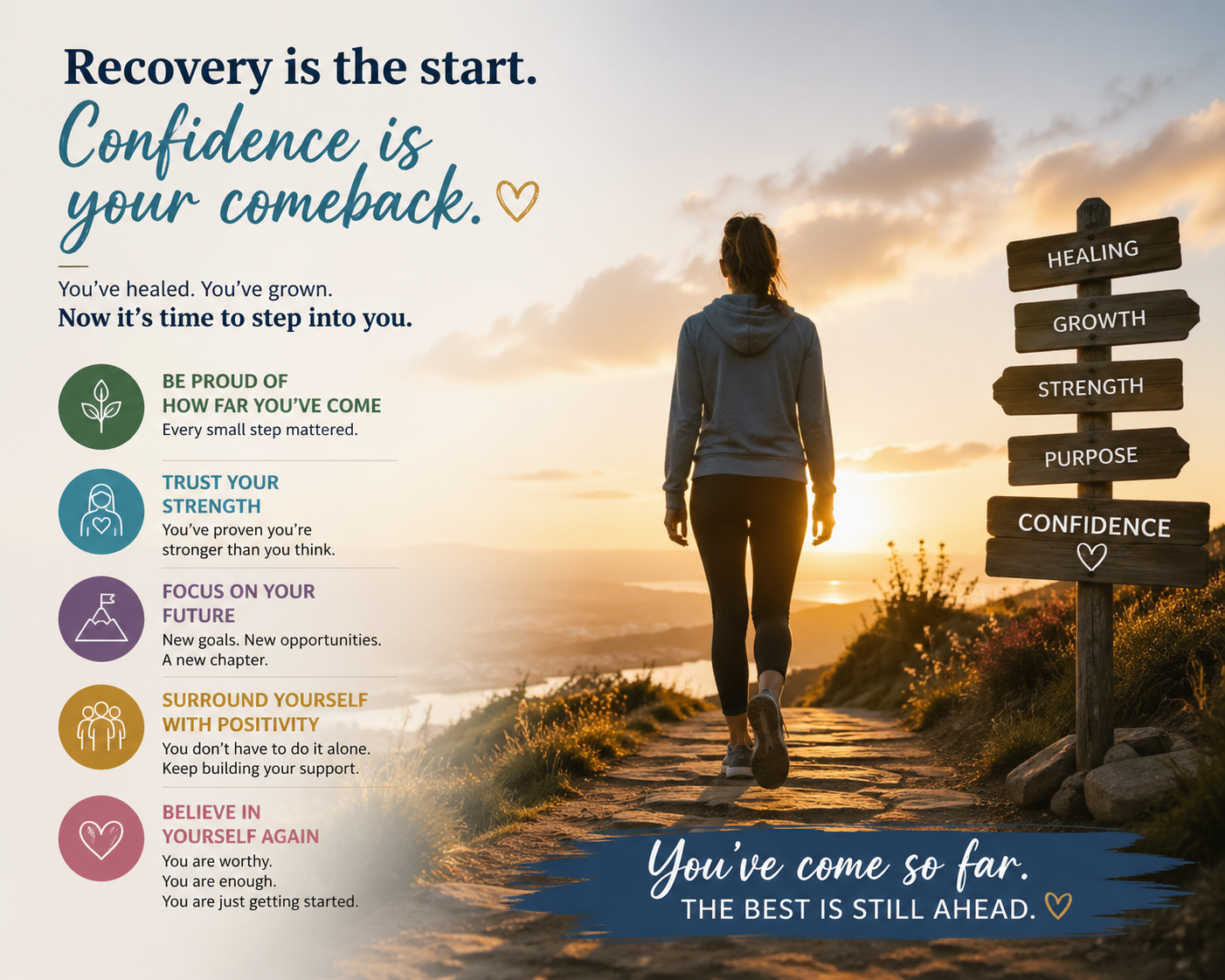
Two-Minute Morning Intent
- What it is: Write one priority for today and one “if-then” backup plan.
- How often: Daily
- Why it helps: You practice choosing direction before emotions choose for you.
- Five-Minute Breath Reset ● What it is: Do 5 minutes of daily meditation focused on slow inhales and exhales.
- How often: Daily
- Why it helps: You lower stress so cravings and doubt feel less urgent.
- Recovery Win Log
- What it is: Record one sober win, one challenge, and one lesson.
- How often: Daily
- Why it helps: You collect evidence of progress even on tough days.
- Support Touchpoint
- What it is: Message a sponsor, friend, or group member with one honest update.
- How often: Weekly
- Why it helps: Connection reduces isolation and strengthens accountability.
Goals in Recovery: Common Questions
Q: How do I set goals without getting overwhelmed? A: Shrink the goal until it feels almost manageable, then commit to it for seven days. Choose one daily action and one weekly action, and ignore everything else for now. If you feel overloaded, reduce the time, not the habit.
Q: What can I do when self-doubt tells me I will fail again? A: Treat doubt as a feeling, not a verdict, and ask, “What is the next workable step?” Then create quick proof by doing one small action you can finish today. Many people rebuild confidence by choosing to celebrate small victories.
Q: When I slip or stall, does that erase my progress? A: No. A setback is feedback about triggers, stress, or support, not your worth. Write down what happened, what you needed, and one boundary or support change to try this week.
Q: How do I stay motivated when I feel emotionally flat? A: Motivation often follows action, not the other way around. Use a “start anyway” rule: do two minutes, then decide if you will continue. This keeps your identity as someone who shows up.
Q: Can confidence really be learned if I have years of shame? A: Yes, and it usually starts with changing how you interpret your days. Practical reframes like five crucial mindset shifts can help you trade harsh self-talk for skills building and support.
Turn Recovery Confidence Into Goals You Keep Showing Up For
Self-doubt, setbacks, and overwhelm can make recovery goals feel shaky, even when the desire to change is real. The way through is a steady, empowering approach: commit to practical recovery steps, measure progress in honest moments, and let confidence reinforcement come from follow-through, not perfection. When these ideas are applied, motivation stops being a mood and becomes a skill that supports living the best life in recovery and sustained personal growth. Confidence grows when actions align with values, one day at a time.
Philadelphia Addiction Center is the #1 Outpatient Treatment Facility for Recovery from Addiction.
Philadelphia Addiction Center, the subdivision of the Philadelphia Holistic Clinic, is known as the best and #1 treatment and recovery center on the East Coast. The success rate of the treatment and recovery provided at the center is way above average in the industry. For more information about Esperal treatment for alcohol abuse, contact the Philadelphia Addiction Center at (267) 403-3085